Generations and Survival, Part III: The Price of a Long Life
Global life expectancy has reached 73.8 years while healthy life expectancy stands at 63.1. That 10.7-year gap, not longevity itself, is what ageing science is actually chasing — and 2026 research has begun to give the effort a molecular foundation.
In Norway, a place in a state care home for the elderly costs $100,000 a year per person. Japan has an old legend about obasute: the practice of carrying the elderly into the mountains to die once they became a burden. A legend. But modern Japan records around 80,000 cases of “lonely death” (kodokushi) every year: someone dies at home and goes unnoticed for weeks. That’s not cruelty. It’s the consequence of intergenerational ties wearing down to nothing.
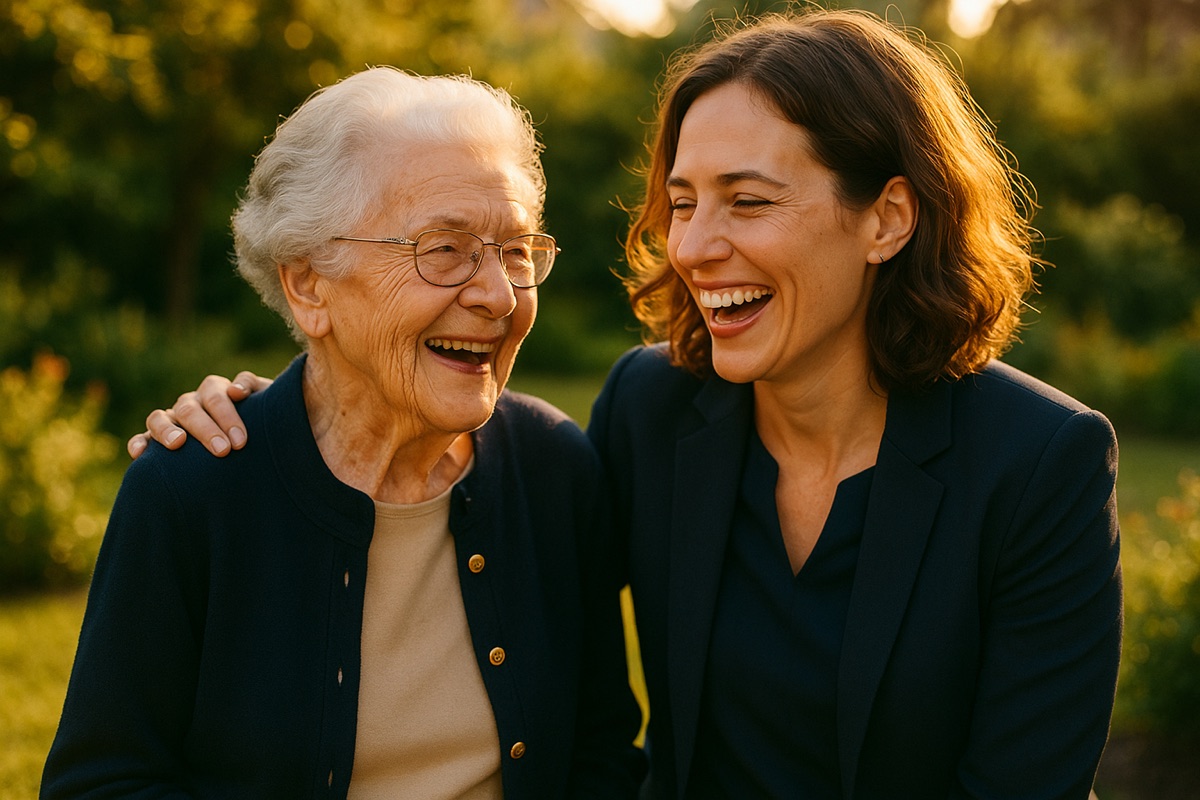
The opposite pole is the Caucasus. Abkhazia, Georgia, and the mountain regions of Azerbaijan hold some of the world’s highest concentrations of centenarians. The secret, it turns out, is embarrassingly simple: intact social ties, contact between generations, physical work well into old age, and, above all, a sense of being needed. Here, an elder is an asset, not a burden.
Gulf states understand this at government level too. The Hevolution Foundation (Saudi Arabia) invests $1 billion a year in biological ageing research. Not philanthropy. Strategy. The region is betting that its population will live to see the next century in sound mind and body.
2026 science is giving these efforts a molecular foundation. In May, Nature published a study covering more than 11,000 transcriptomes across 25 tissues from mice, rats, macaques and humans, identifying conserved ageing signatures that operate the same way across all mammals. In July, the same journal reported 29 genetic loci, known as VITA, that govern mortality within specific age windows: the genes that kill at 60 differ from the ones that kill at 75. Ageing isn’t a single process. It’s a series of programmes, each with its own switch.
One of the most promising avenues is the fight against senescent cells: biological rubbish, cells that have stopped dividing but haven’t died. They accumulate and poison surrounding tissue with inflammation, and that build-up is ageing at the cellular level. A vaccine-based approach to clearing them is unconventional, which is exactly why the market finds it interesting. That same market has already put $4.2 billion in private capital into longevity biotech over three years.
“In cultures where an elder is an asset, not a burden, demographic crises are solved differently. The family as an institution is the oldest form of social insurance we have, and we dismantled it without inventing anything better.”
— Ibrahim Diane, VOSTOK ONE
This is where the real balance lies, the one longevity science is actually chasing: not a longer life, but a better one. According to 2023 Global Burden of Disease data, average global life expectancy rose to 73.8 years, while healthy life expectancy reached only 63.1. The gap between being alive and living consciously, capably, actively already stands at 10.7 years, and it keeps widening. Extending life isn’t the hard part. Extending the stretch of it where a person stays a capable citizen, not a patient, is.
The VOSTOK ONE team, a biotechnology platform with a portfolio of 11 candidates, looks at this crisis through a different lens. Here, life isn’t divided into age brackets. It’s seen as a single path, from schoolchild to wise mentor. Neuroprotection after stroke, suppression of biological ageing, non-opioid pain relief: every molecule in the platform is aimed at a specific point on that path where a person risks being cut off from it.
“We’re not building this platform for one disease, or one country. The path from schoolchild to wise mentor: that is our horizon. Science should work across the full length of a human life.”
— Vladimir Skripnichenko, VOSTOK ONE
Sources
- Nature, May 2026 — Universal transcriptomic hallmarks of mammalian ageing and mortality
- Nature, July 2026 — Dynamics of genetic and somatic trade-offs in ageing and mortality — VITA loci; Rob Williams, UT Health Sciences
- Hevolution Foundation Annual Report 2025
- IHME / Global Burden of Disease 2023, Lancet Public Health — global life expectancy against healthy life expectancy